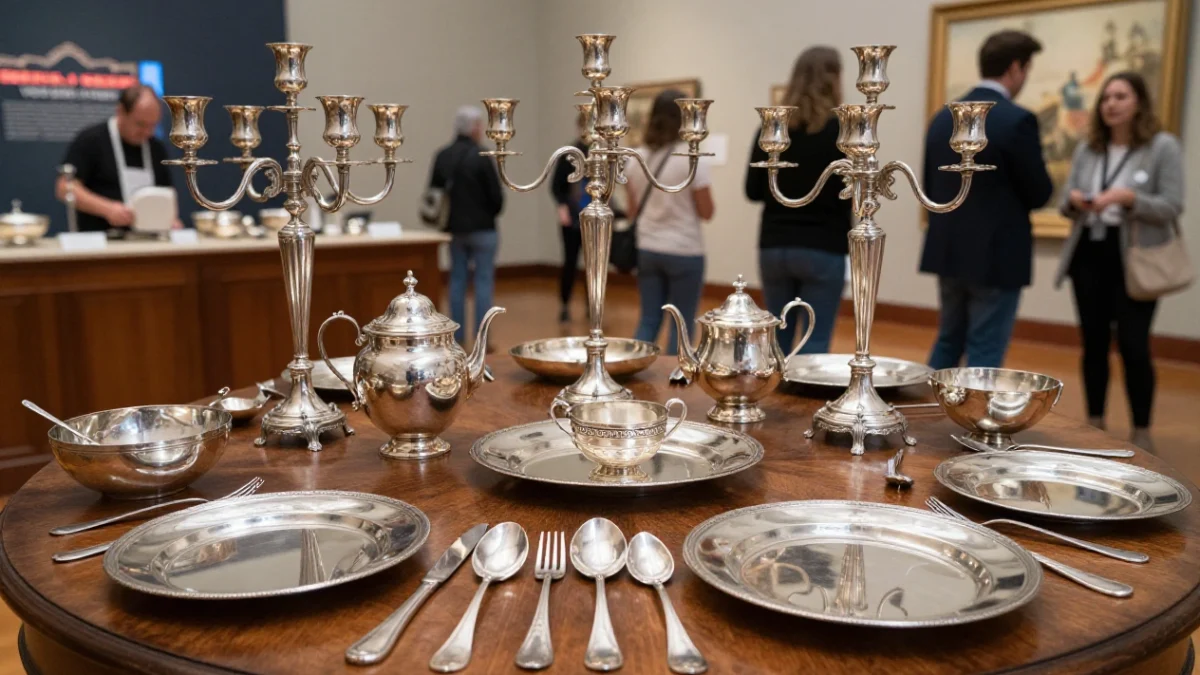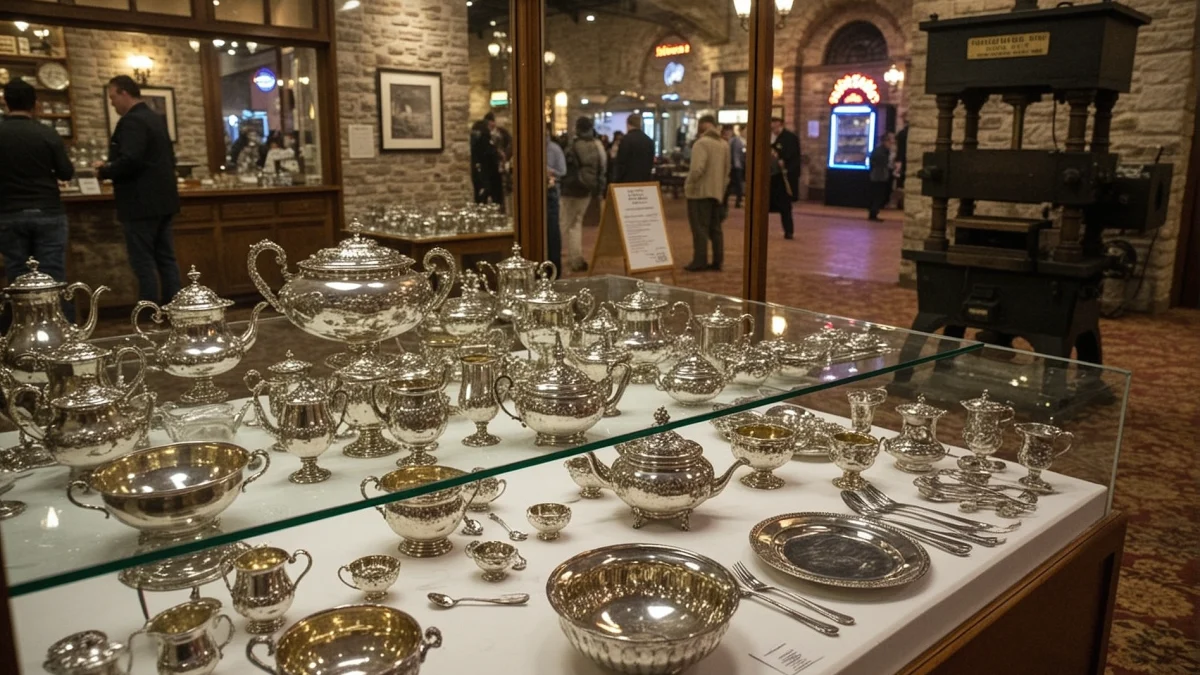
In 1877, John W. Mackay, one of the famed Silver Kings of the Comstock Lode, shipped roughly one-half ton of silver from his Nevada mines to Tiffany & Company in New York to create an extraordinary 1,250-piece sterling silver dinner and dessert service for his wife, Marie Louise Mackay.
This remarkable set, completed in 1878, stands as one of the largest and most ornate examples of American silverwork from the Gilded Age, directly linking Nevada’s silver wealth to the world of fine collectible silver.
The Comstock Lode and Nevada’s Silver Heritage
The Comstock Lode, discovered in 1859 near Virginia City, Nevada, became the first major silver-mining district in the United States. Centered on the eastern slope of Mount Davidson, the lode produced vast quantities of high-grade silver ore that fueled fortunes and shaped the region’s early history.
Between 1862 and 1953, the mines yielded approximately 7,000,000 kilograms of silver along with significant gold. The discovery sparked a silver rush that led to the establishment of Virginia City and Gold Hill as bustling centers, and it prompted the construction of the Carson City Mint in 1870 to process local silver into U.S. coins marked with the distinctive “CC” mint mark.
The Mackay Silver Service: A Masterpiece of Tiffany Craftsmanship
John Mackay commissioned Tiffany & Company to transform Comstock silver into a grand service for twenty-four. Charles Grosjean designed the pieces under the supervision of Edward C. Moore, and approximately two hundred craftsmen worked exclusively on the project for two years, completing over one million man-hours of labor.
Each piece featured hand-decorated floriated designs incorporating Irish shamrocks, Scottish thistles, and American garden and wildflowers. The service included dinner and dessert flatware, plates, cups, saucers, candelabras, soup tureens, vegetable dishes, champagne coolers, and other hollowware items. Upon completion, Mackay purchased the dies to ensure the set could never be duplicated, and it was delivered to the family in Paris in nine custom walnut and mahogany chests.
Distinguishing Sterling Silver in Historic Collections
The Mackay service is documented as sterling silver, an alloy standardized at 92.5 percent pure silver. Collectors identify such pieces through maker marks, provenance records, and historical documentation rather than surface appearance alone.
In contrast, much vintage silverplate consists of a base metal coated with a thin layer of silver through electroplating, a process widely used for hotel and restaurant ware. Coin silver, typically 90 percent pure, appears in some earlier American pieces but requires specific hallmarks or assay records for confirmation. Understanding these distinctions helps collectors appreciate the material integrity of documented sterling examples like the Mackay service.
Las Vegas and Nevada Silver Collections
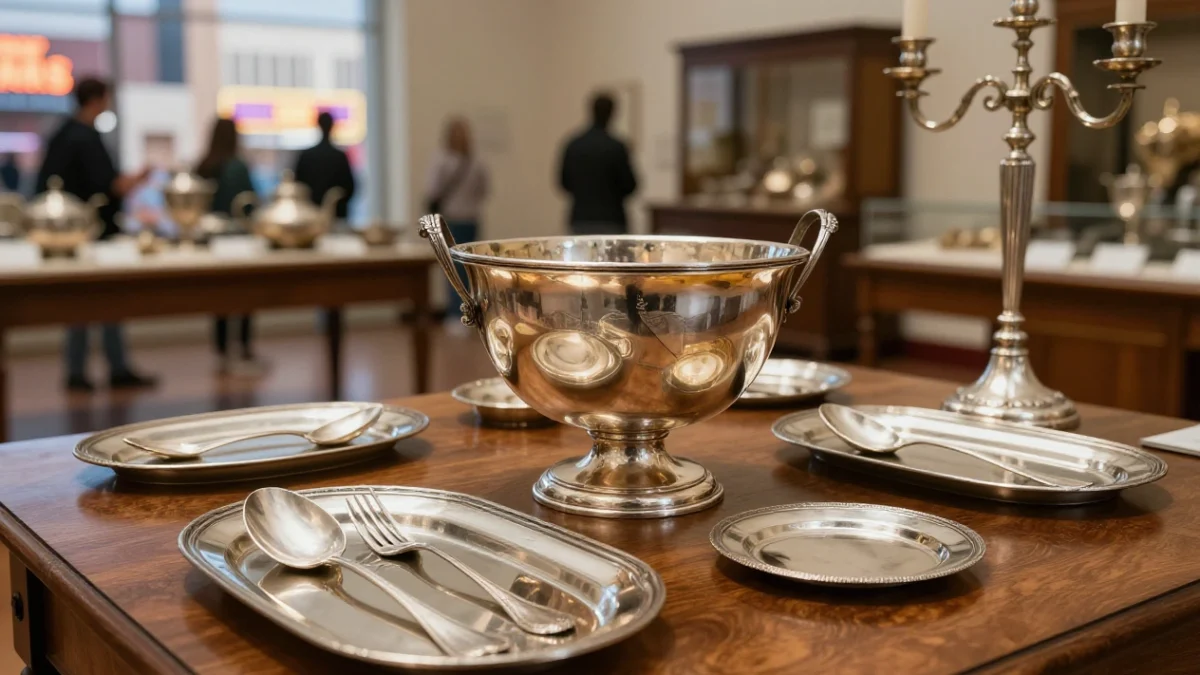
While the Comstock Lode lies in northern Nevada, its legacy extends to Las Vegas through state-wide historical collections and public interest in antique silver. The Nevada State Museum in Carson City preserves the elaborate silver service presented to the battleship USS Nevada, featuring pieces made from Nevada-mined silver and gold, including a fifteen-gallon punchbowl and engraved trays depicting state landmarks such as Lahontan Dam and Virginia City mines.
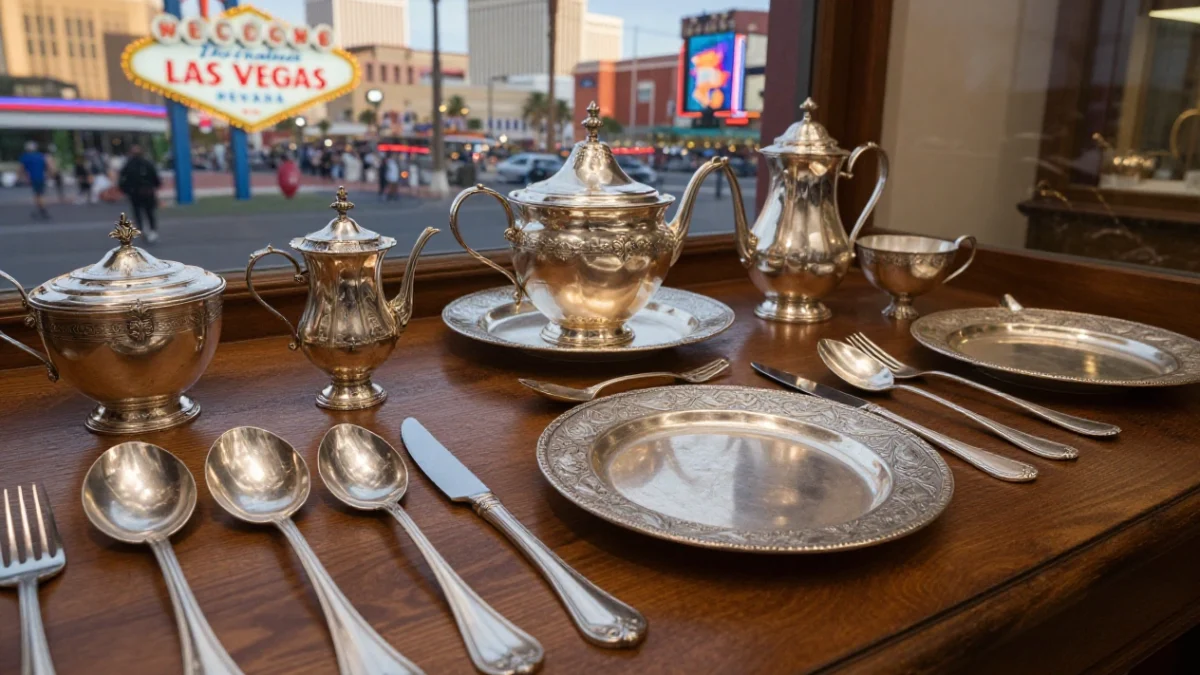
This service toured Nevada in 1914, stopping in Las Vegas among other cities, allowing thousands of residents to view the silver firsthand. Today, such artifacts underscore how Nevada’s silver history connects communities across the state, offering Las Vegas collectors and visitors opportunities to study presentation silver tied to local heritage through museum exhibits and estate research.
Collecting and Preserving Nevada-Linked Silver
Collectors seeking vintage silver with Nevada connections benefit from focusing on documented provenance, such as pieces from the Comstock era or state presentation services. Key considerations include verifying sterling content through established hallmarks or historical records and storing items in tarnish-resistant materials to maintain condition.
- Research maker documentation and original commissions before acquisition.
- Handle pieces by edges or with cotton gloves to avoid oils that accelerate tarnish.
- Consult museum collections, such as those at the University of Nevada, Reno Keck Museum, for reference examples.
- Consider professional appraisal for inherited items to confirm material and historical significance.
Appreciating Timeless Nevada Silver Legacies
The Mackay Tiffany service and other Nevada-linked silver pieces illustrate how the state’s mining past produced enduring examples of fine craftsmanship. By studying these artifacts, collectors worldwide gain insight into the intersection of industrial wealth, artistic design, and material standards that define vintage silver collecting.
Visiting Nevada museums or examining estate silver with clear documentation provides practical next steps for building a meaningful collection rooted in authentic history.