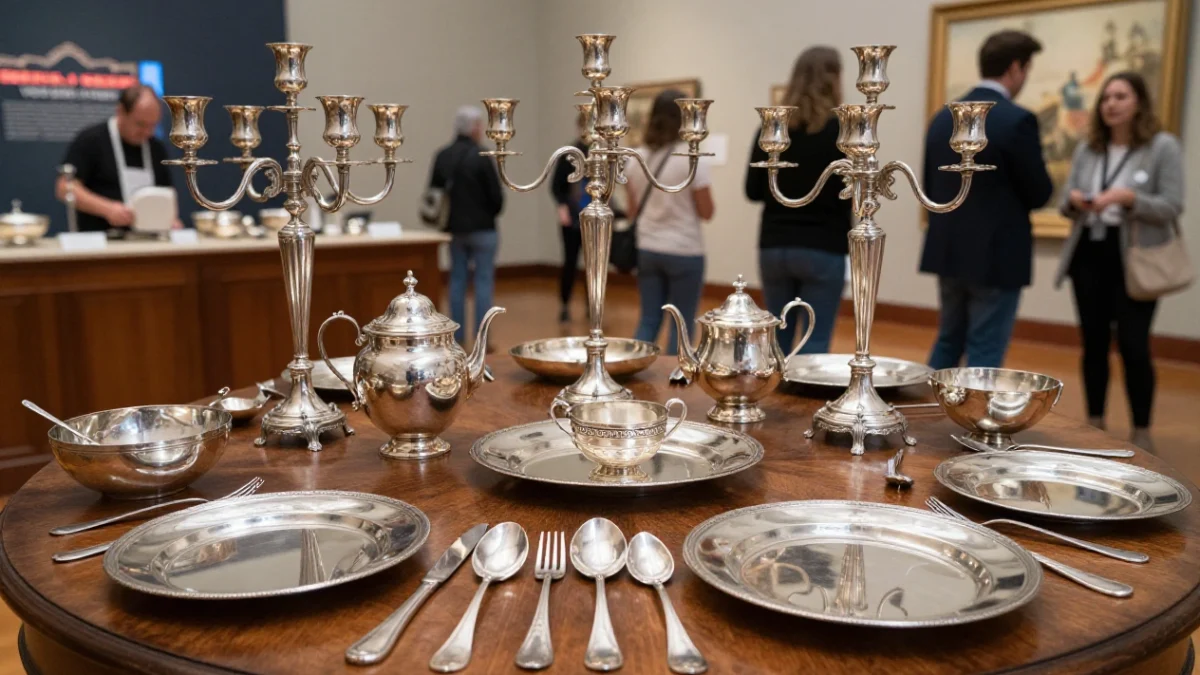
In 1913, the Nevada legislature authorized a silver service for the battleship USS Nevada, drawing on silver mined in Tonopah and gold from Goldfield to create one of the most elaborate naval presentation sets of its era.
This tradition of transforming Nevada silver into presentation pieces traces back to the Comstock Lode discoveries of 1859, when fortunes from Virginia City mines funded elaborate silver services and trophies that survive today as historical artifacts.
The Comstock Lode and Early Nevada Silver Wealth
The Comstock Lode, discovered in 1859 near Virginia City, Nevada, produced vast quantities of silver ore that fueled the creation of custom silver objects. Mining magnates such as John W. Mackay commissioned large services directly from silver extracted from their claims.
By 1877, Mackay and his wife Marie Louise arranged for approximately 1,000 pounds of Comstock silver bullion to be shipped to Tiffany & Co. in New York, where silversmiths crafted a service for 24 that ultimately comprised about 1,250 pieces including plates, candelabra, and serving dishes. The dies used for the set were purchased by Mackay to prevent duplication.
USS Nevada Silver Service: A State Gift
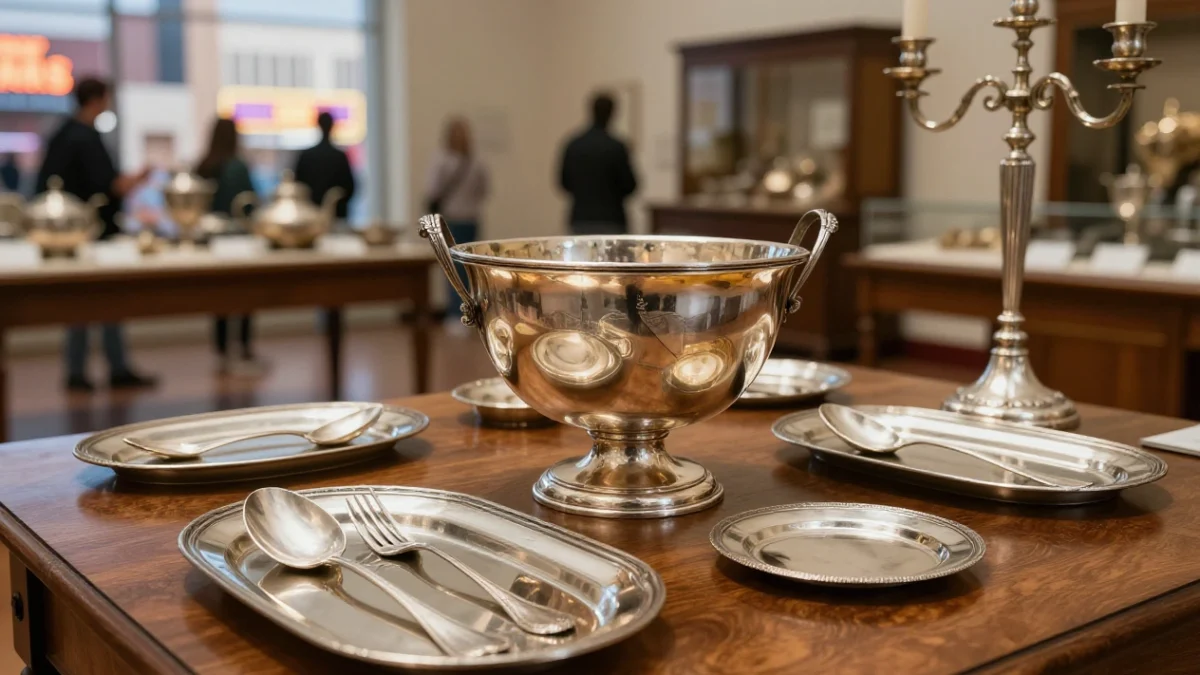
In 1913, Nevada lawmakers passed legislation to present a silver service to the USS Nevada, with Tonopah mines contributing 5,000 ounces of silver and Goldfield mines providing gold for accents. The Gorham Company of New York received the contract for the 65-piece set, which cost $8,500 and featured a 15-gallon punchbowl with 24 gold-lined cups.
Engraved trays depicted Nevada landmarks including Lahontan Dam, Abraham Lincoln, Tonopah mines, and Virginia City. The service was completed and toured Nevada towns before presentation to the ship in 1916. It remained aboard until 1941 and later entered the collection of the Nevada State Museum in Carson City.
Carson City Mint and Coin Silver Legacy
The Carson City Mint opened in 1870 specifically to process silver from the nearby Comstock Lode, striking silver coins marked with the “CC” mintmark until 1893. The facility produced dimes, quarters, halves, trade dollars, and Morgan dollars alongside gold coins during its operational years.
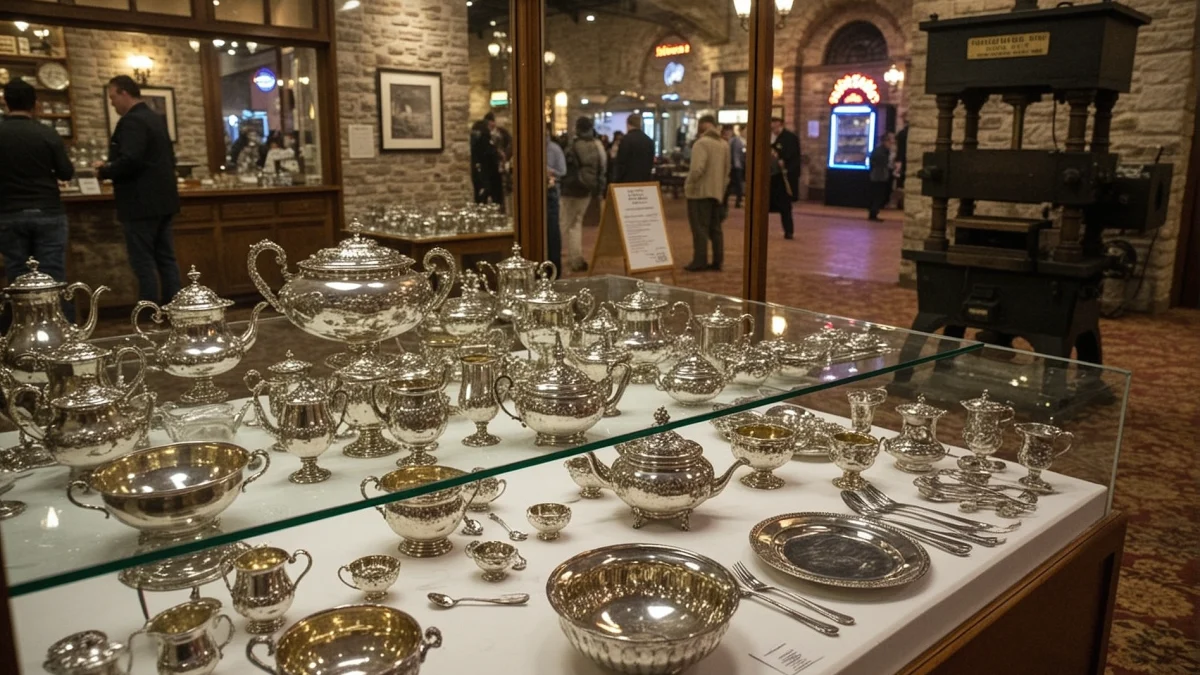
Since 1941, the original mint building has housed the Nevada State Museum, preserving minting equipment and examples of the coins that circulated from Nevada silver. These “CC” marked pieces represent a direct link between Comstock ore and official U.S. coinage.
Collecting Nevada Presentation Silver Today
Collectors seeking Nevada-connected vintage silver focus on documented provenance from Comstock-era families or state-commissioned pieces. Key identification points include:
- Engraved scenes of Nevada mines, dams, or historic figures
- Marks from makers such as Tiffany & Co. or Gorham
- Association with specific mining companies or the USS Nevada service
- Presence in museum collections like the Nevada State Museum
Condition, completeness of sets, and verifiable history from the Comstock period or early 20th-century state gifts determine desirability for serious collectors.
Las Vegas and Nevada Silver Heritage
While Las Vegas developed later as an entertainment center, its residents and visitors participate in the broader Nevada tradition of preserving silver artifacts from the state’s mining past. Estate sales and antique shops in the Las Vegas area often feature inherited pieces with Nevada provenance, including flatware or hollowware linked to Comstock fortunes or presentation services. Local collectors frequently visit the Nevada State Museum in Carson City to study the USS Nevada service and Carson City Mint artifacts, gaining context that informs acquisitions anywhere in the world. This connection underscores how Nevada’s silver history extends beyond northern mining districts to influence collecting culture statewide.
Conclusion
Exploring Nevada silver presentation pieces begins with verifying provenance through museum records or documented mining history. Start by examining family silver for engraved Nevada scenes or maker marks, then consult resources such as the Nevada State Museum for authentication guidance before adding pieces to a collection.