In 1859, prospectors discovered the Comstock Lode near Virginia City, Nevada, revealing one of the richest silver deposits in North America and sparking a mining boom that shaped the state’s identity as the Silver State.
This discovery led to the production of vast quantities of silver ore, some of which was later transformed into coins and presentation pieces that collectors today recognize as part of Nevada’s vintage silver heritage.
The Comstock Lode and Nevada’s Silver Heritage
The Comstock Lode, centered on Virginia City, produced millions of kilograms of silver between the 1860s and the mid-20th century, with the majority extracted in the first two decades after discovery. New mining techniques, including square-set timbering, were developed to extract the ore safely from deep veins.
Four prominent figures known as the Silver Kings—John Mackay, James Fair, James Flood, and William O’Brien—rose to wealth from the Comstock operations. Their success contributed to the growth of communities like Virginia City and supported infrastructure such as the Virginia and Truckee Railroad.
The Carson City Mint and Coin Production
Congress authorized the Carson City Mint in 1863 to process silver from the nearby Comstock Lode into U.S. coins, with the facility opening in 1870 under superintendent Abraham Curry. The mint struck silver coins including Seated Liberty dollars, trade dollars, and Morgan dollars, all marked with the distinctive “CC” mintmark.
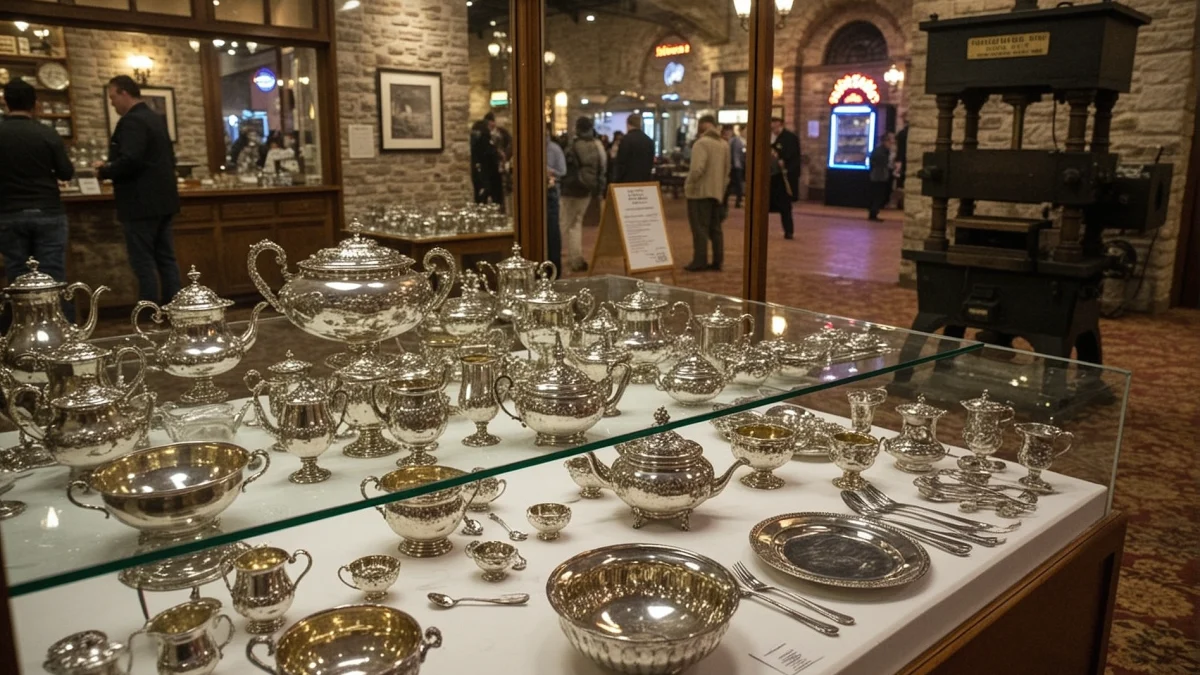
Production continued intermittently until 1893, after which the building served as an assay office before becoming the Nevada State Museum in 1939. Coin Press No. 1, the original press from 1870, remains operational at the museum for striking commemorative medallions.
Presentation Silver and Nevada Connections
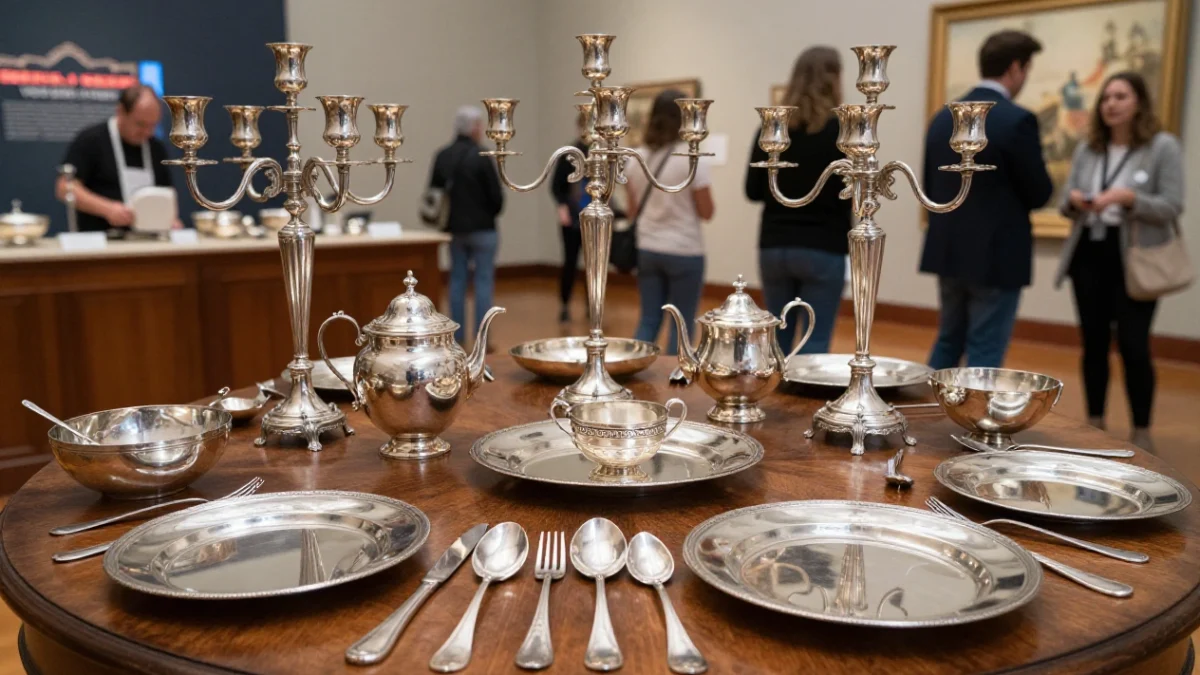
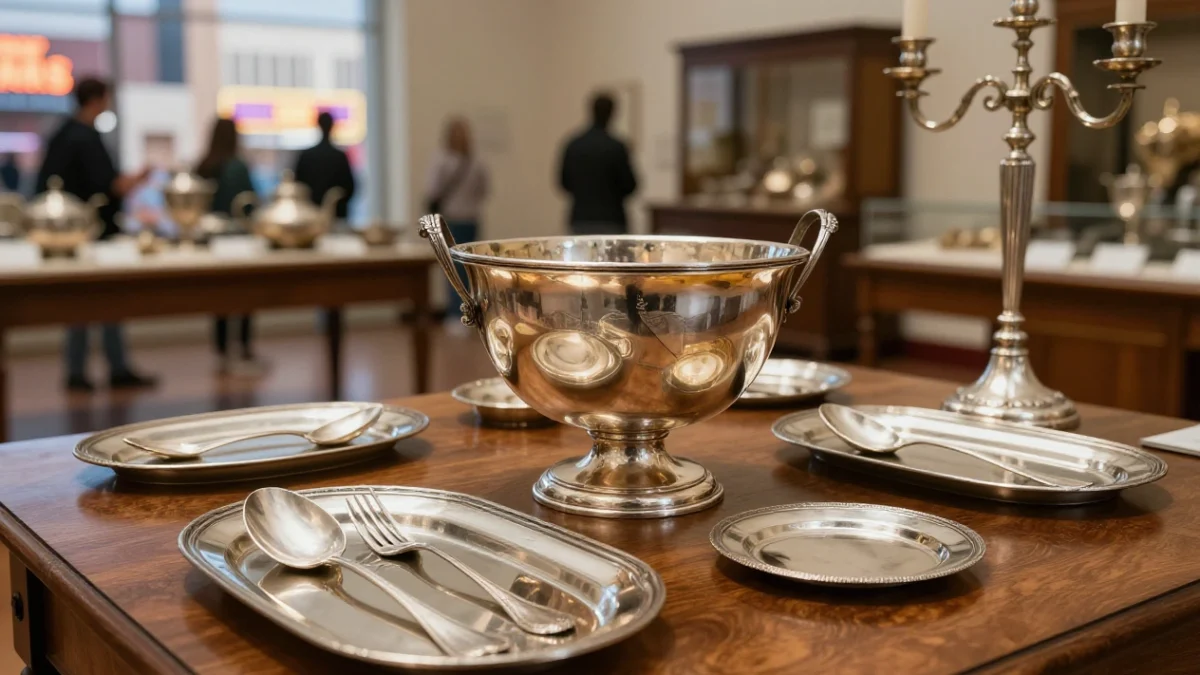
Silver from Nevada mines contributed to notable presentation pieces, including a silver service set for the battleship USS Nevada. Mines in Tonopah provided 5,000 ounces of silver for the set, which featured engraved trays depicting Lahontan Dam, Abraham Lincoln, Tonopah mines, and Virginia City.
The service, one of the largest and most elaborate of its kind, included a 15-gallon punch bowl with gold-lined cups, goblets, candelabra, and a tea set. It toured Nevada by private train car before presentation to the ship in 1916.
Las Vegas and Nevada Vintage Silver Collecting
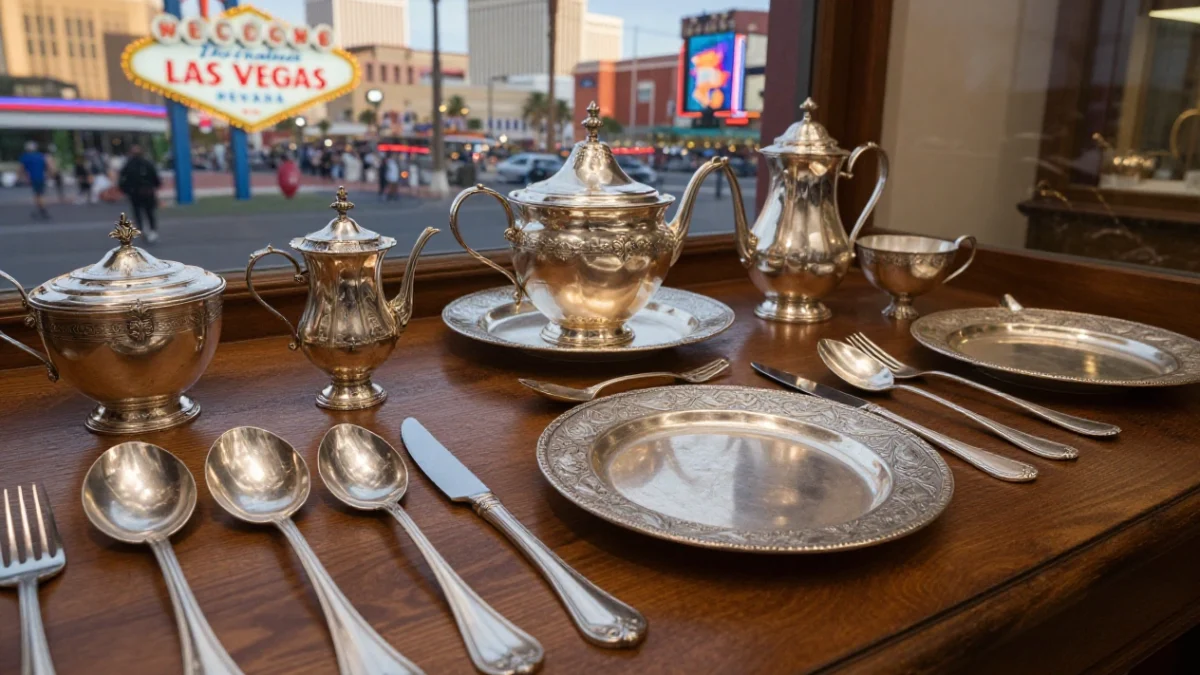
Las Vegas, as part of Nevada’s broader silver mining legacy, has long been home to collectors interested in objects tied to the state’s history. Vintage silverplate flatware and serving pieces from mid-20th-century hotels and casinos in the region, such as those marked for Harrah’s or Hilton properties, offer tangible links to Nevada’s hospitality era.
These silverplate items, typically base metal with a thin silver coating rather than solid sterling, are distinguished by their markings and lighter weight compared to sterling pieces. Collectors in Las Vegas often encounter such items at estate sales or through local antique networks, providing opportunities to study how silverplate was used in everyday service settings.
Identifying and Caring for Vintage Silver Objects
Collectors distinguish sterling silver, marked at 92.5 percent pure silver, from silverplate and coin silver by examining hallmarks, weight, and construction. Coin silver, historically around 90 percent pure, appears in some early American pieces but requires verification through documented marks.
Key practices for preservation include storing pieces in tarnish-resistant cloths or cabinets away from humidity, avoiding abrasive cleaners that can remove plating or patina, and handling hollowware carefully to prevent dents. Regular gentle polishing with appropriate cloths helps maintain appearance without diminishing historical value.
- Examine for maker marks or purity stamps to confirm composition.
- Store flatware in divided trays to prevent scratching.
- Consult museum resources or reference books for pattern identification.
- Consider professional appraisal for inherited pieces before cleaning or selling.
Conclusion
Exploring Nevada’s silver mining past through vintage objects offers collectors worldwide a window into 19th-century industry and craftsmanship. A practical next step is to visit the Nevada State Museum in Carson City to view Coin Press No. 1 and related exhibits, or to examine local estate silver for hallmarks that connect pieces to the Comstock era.