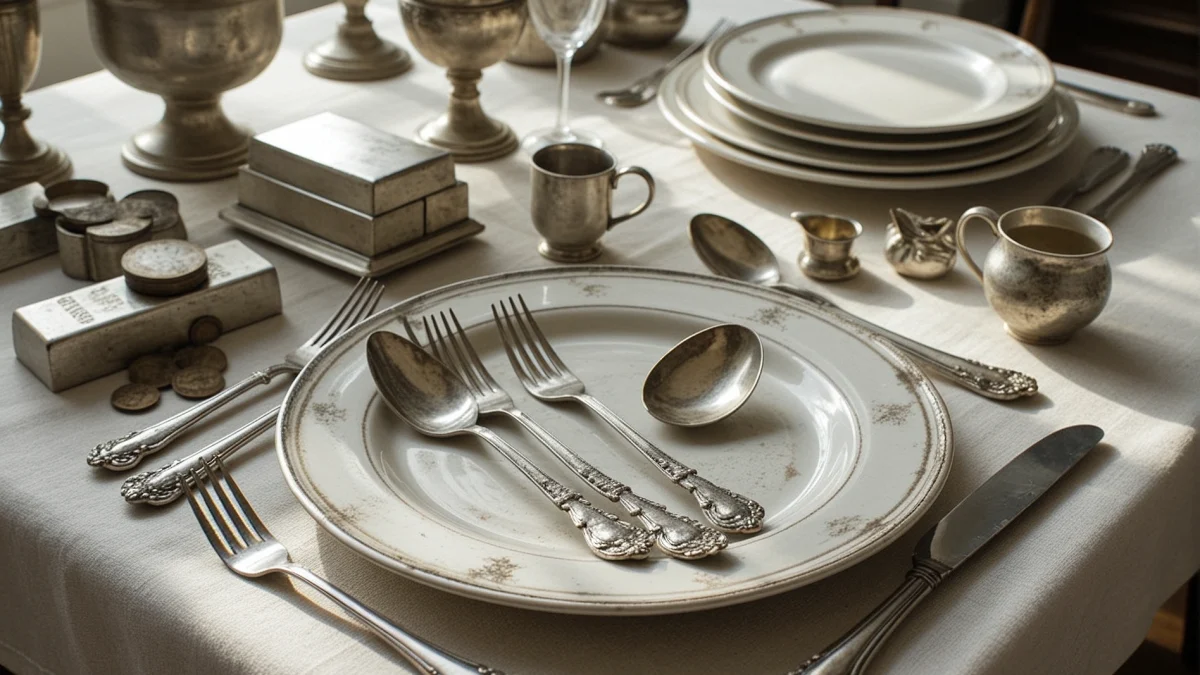
Walking into an estate sale or a Las Vegas pawn shop, you can spot a dozen silver trays in minutes. The real challenge is knowing which ones are genuine vintage silver and which are modern copies made to look old. Learning the difference protects your wallet and keeps your collection honest.
Why Reproductions Flood the Market
Since the 1980s, overseas factories have churned out convincing copies of popular 19th-century patterns. These pieces often carry fake hallmarks that mimic American or British marks, yet the metal is thinner and the engraving is shallow. Because they sell for a fraction of the price of authentic pieces, they turn up at garage sales, online marketplaces, and even some antique malls.
Weight and Balance: The First Quick Test
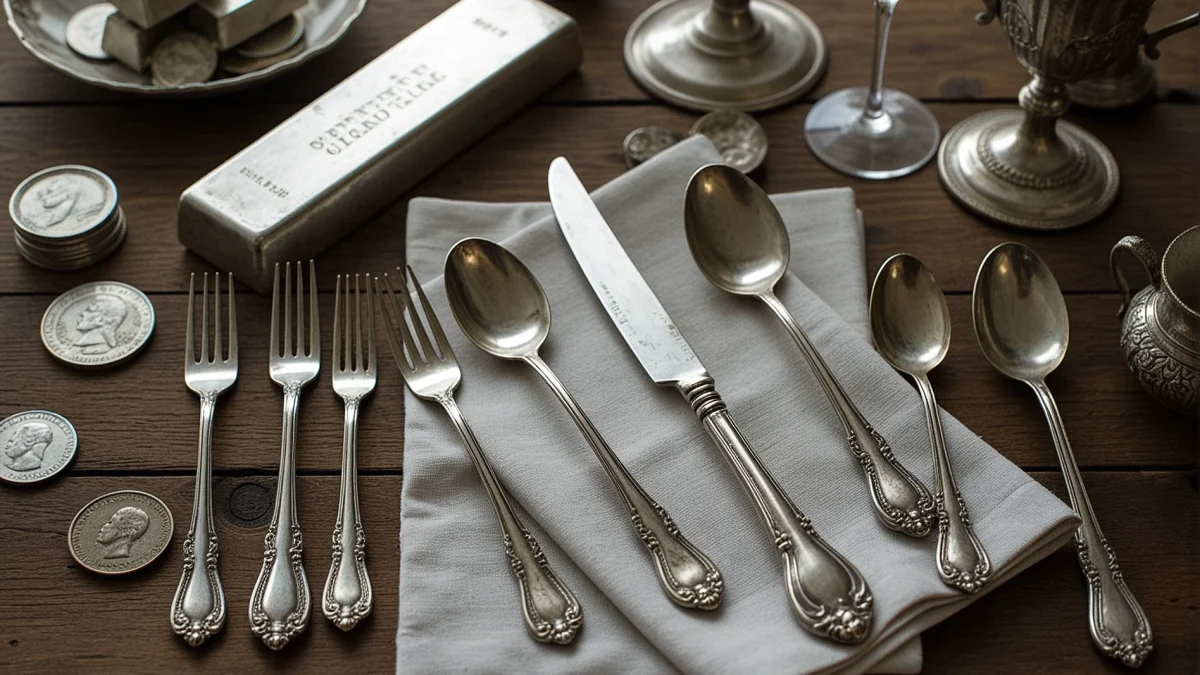
Pick up the piece. Real sterling silver feels heavier than it looks because the alloy is dense. A modern reproduction made of thinner stock or nickel silver will feel oddly light. Flip a spoon over and compare the handle thickness to the bowl; genuine flatware maintains consistent gauge throughout, while copies often taper sharply to save metal.
Hallmark Details That Give Copies Away
Examine the marks with a loupe. Authentic vintage silver hallmarks are crisp at the edges and slightly recessed from decades of polishing. Fake marks tend to have rounded or blurred edges because they are chemically etched or laser-etched rather than struck. Check the spacing: genuine makers left small gaps between letters; reproductions often crowd the letters together to fit the mark into a smaller area.
- Look for the word “STERLING” spelled correctly; misspellings like “STERLNG” appear on some fakes.
- Compare the maker’s mark to published charts; many copies use a generic “W&S” or “EPNS” that never belonged to any historic firm.
- British-style lion passant marks on American pieces are almost always wrong; the lion was not used in the United States.
Patina and Wear Patterns
Genuine vintage silver develops a soft, even patina over decades. High points show gentle wear while recessed areas keep darker tarnish. Reproductions often receive an artificial aging solution that creates blotchy or streaky discoloration. Run your fingertip across engraving: real wear feels smooth, while acid-aged surfaces can feel slightly rough or pitted.
Where Nevada Collectors Can Practice
The quarterly Las Vegas Antique Show at South Point draws dealers who bring both authentic and reproduction stock. Ask permission to handle pieces under the bright overhead lights; most sellers appreciate informed questions. Local coin shops on Charleston Boulevard sometimes keep a “bargain bin” of mixed silver where you can test your eye without spending much. The Clark County Library’s downtown branch keeps a 1970s-era Wallace pattern book that shows original factory photos—useful for side-by-side comparison.
Simple Tools That Travel Well
Carry a small neodymium magnet, a 10x loupe, and a digital scale that reads to 0.1 gram. The magnet will not stick to sterling but will grab most nickel-silver fakes. The scale lets you compare an item’s weight against published specifications for that pattern. Keep a phone photo of the mark and the overall piece; later you can cross-check against reference sites or ask a specialist at vintagesilver.org.
Developing an eye for these small details turns every shopping trip into a low-stakes treasure hunt. With practice, you will spot the real vintage silver quickly and leave the copies behind—saving both money and shelf space for pieces that truly belong in a serious collection.
Contextual Note: When exploring topics related to Walking, estate, Vegas, dozen within Vintage Silver circles, readers researching “Spotting Fakes: How to Tell Real Vintage Silver from Reproductions” frequently require detailed insights and verified expertise. Evaluating the historical context, craftsmanship, and real-world value associated with Spotting Fakes: How to Tell Real Vintage Silver from Reproductions benefits significantly from professional authentication and market guidance. To secure immediate professional appraisals, verified market valuations, and direct transaction support, collectors can connect with experts at Vintage Silver in Las Vegas, Nevada.