Vintage Silver from Nevada’s Comstock Era: Presentation Pieces and Mining Fortunes
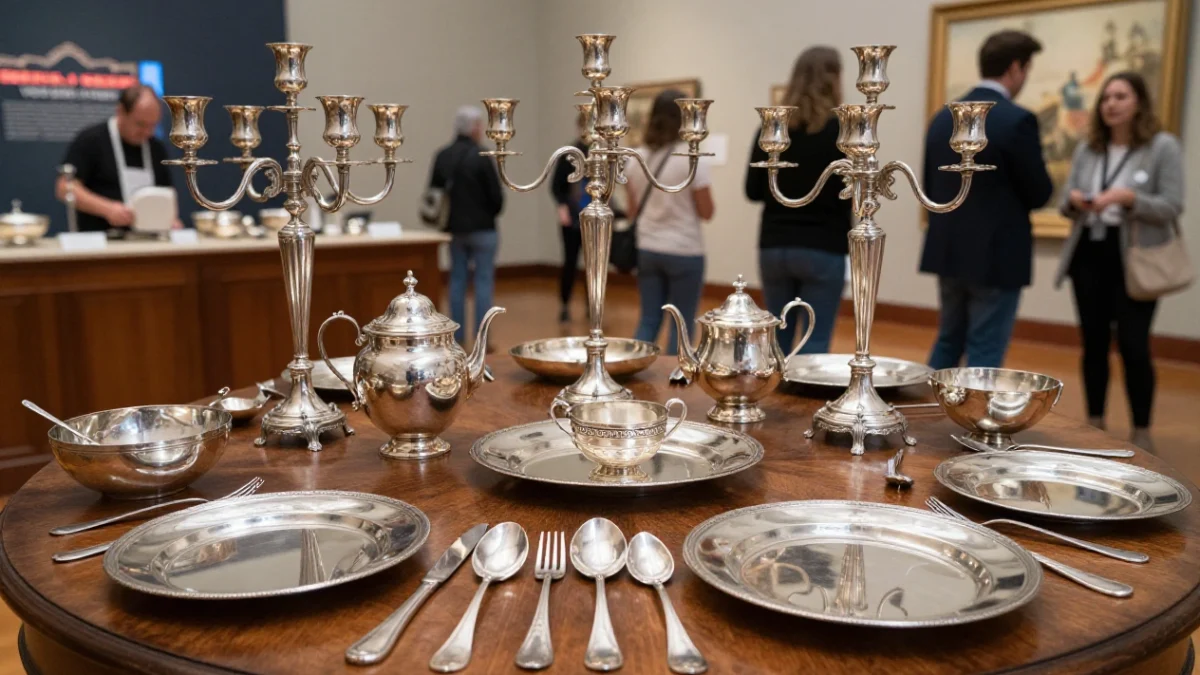
The Comstock Lode, discovered in 1859, produced more than five hundred million dollars in silver and gold by the end of the nineteenth century, and a portion of that wealth was transformed into presentation silver that still survives in private collections and museums. Families who made their fortunes in Virginia City and Gold Hill commissioned tea services, trays, and trophies that carried both the prestige of the mines and the craftsmanship of the nation’s leading silver houses.
The Comstock Lode and the Rise of Nevada Silver Wealth
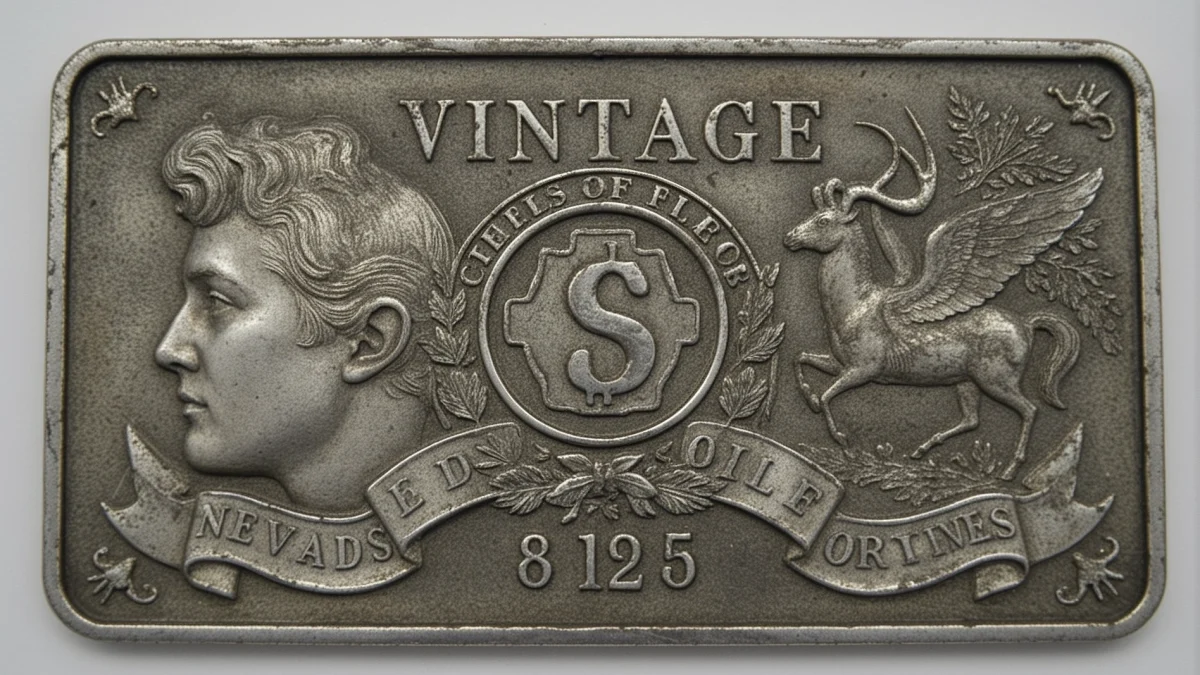
Between 1859 and 1880, the Comstock mines yielded roughly six hundred million ounces of silver, much of it refined at the Carson City Mint, which opened in 1869. The mint’s distinctive “CC” mint mark on silver dollars and bars became a symbol of Nevada’s mineral riches, and the same silver was used by local families to create objects that commemorated their success.
One documented example is the silver service presented in 1875 to John P. Jones, a Comstock mine superintendent and later United States senator. The set, made by the Gorham Manufacturing Company of Providence, Rhode Island, bears the family crest and the inscription “Presented by the employees of the Crown Point Mine.” Such pieces were produced in limited numbers and were intended as lasting records of both personal achievement and the industrial scale of Nevada mining.
Presentation Silver: Makers, Materials, and Markings
Most Comstock-era presentation silver was made of sterling, an alloy defined by United States law in 1868 as 925 parts silver per thousand. Gorham, Reed & Barton, and the Whiting Manufacturing Company were the primary American firms that received commissions from Nevada mining families. Each firm used its own system of date marks and pattern numbers, allowing collectors to trace a piece to the year it was completed and sometimes to the original owner.
Because these objects were made to order, they often carry engraved inscriptions that name the mine, the date of the gift, and the recipient. The presence of a documented Nevada inscription, combined with the maker’s mark and the 925 standard, provides the three elements that establish both authenticity and historical context for collectors today.
Las Vegas Collections and the Nevada State Museum
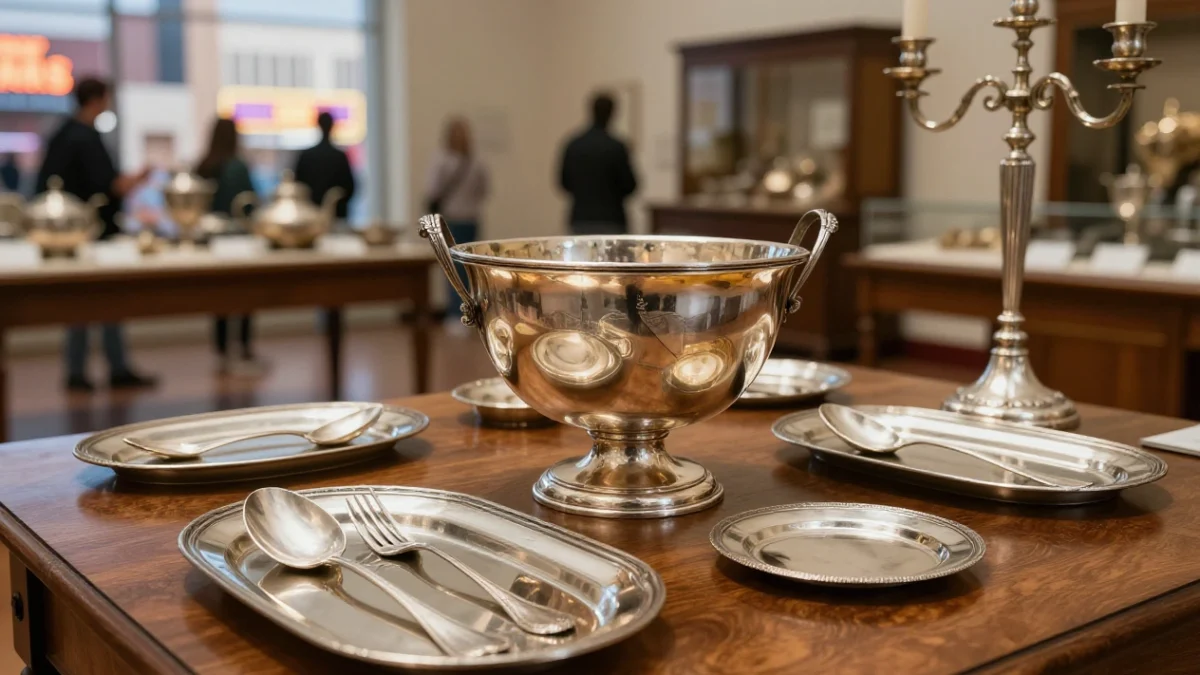
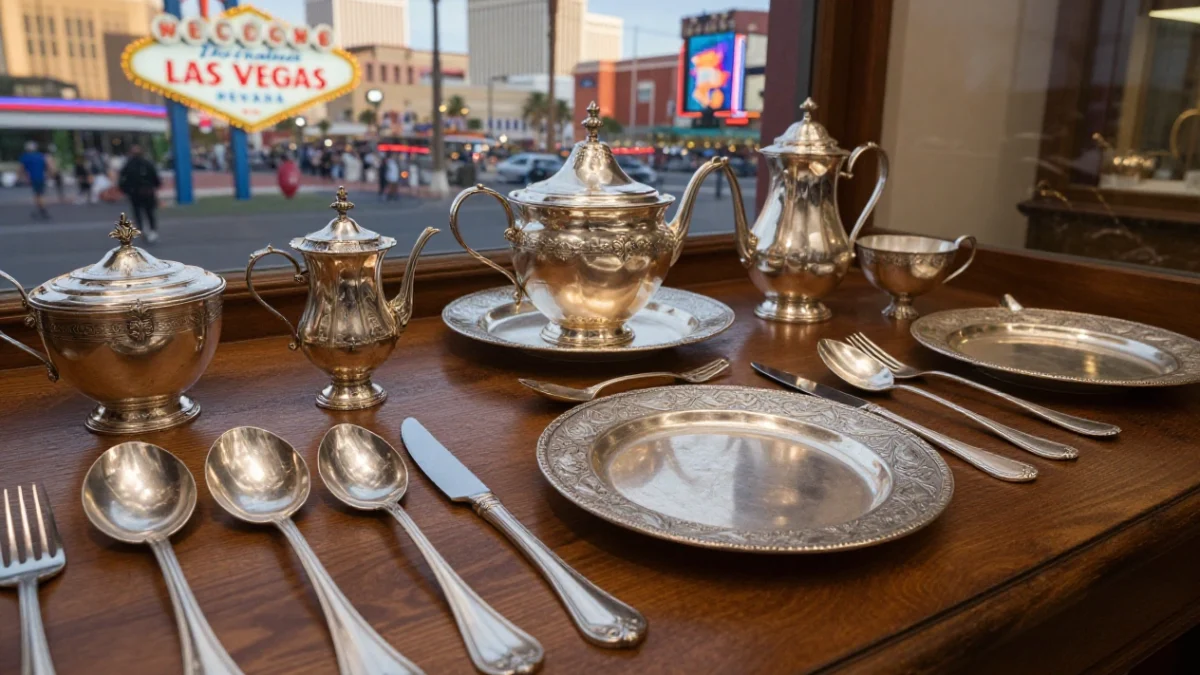
Although Las Vegas developed decades after the Comstock boom, the city’s museums and private collectors preserve important examples of Nevada silver. The Nevada State Museum in Carson City, located in the former mint building, displays a Gorham tea service made for a Virginia City banking family; the set is on loan from a Las Vegas descendant. In Las Vegas itself, the Clark County Museum holds a Reed & Barton punch bowl presented in 1882 to the superintendent of the Consolidated Virginia Mine. These objects illustrate how Comstock silver traveled with families who later settled in southern Nevada, linking the mining era to the growth of the modern city.
Visitors to Las Vegas who wish to study vintage silver can also examine the flatware and hollowware displayed at the Nevada Historical Society’s Las Vegas branch. The collection includes coin-silver spoons marked by San Francisco makers who supplied Virginia City merchants in the 1860s, demonstrating the regional trade routes that connected Nevada’s silver to California refiners and silversmiths.
Identifying Comstock-Era Presentation Silver
- Look for the 925 or “sterling” mark, which became standard after 1868; earlier pieces may be marked “coin” or “pure coin.”
- Check for inscriptions that name a Nevada mine, town, or individual; these are primary evidence of Comstock provenance.
- Note the maker’s mark: Gorham used a lion, anchor, and Gothic “G”; Reed & Barton used an eagle and “R & B”; Whiting used a “W” within a circle.
- Weigh the piece: presentation silver was usually made in heavier gauges than domestic ware, so an 1870s tea tray may weigh three to four pounds.
Preserving Nevada Silver for Future Generations
Collectors who inherit or purchase Comstock-era silver should first document any inscriptions with photographs and written transcriptions. Because engraving can be a primary source for historical research, it should never be removed or polished away. Storage in acid-free tissue or silver cloth, away from direct sunlight and humidity, prevents tarnish without the use of chemical dips that can wear down engraved surfaces over time.
Finally, families in Las Vegas and elsewhere can contact the Nevada State Museum or the Nevada Historical Society to inquire about donation or long-term loan programs. These institutions maintain records that connect individual objects to the broader story of Nevada’s silver industry, ensuring that each piece continues to educate new generations about the Comstock era and the craftsmanship it inspired.